- Lewis Diagrams are a simplified model of atoms and ions that show only valence elections
- shorthand for chemists to help visualize and predict how atoms will behave in chemical reactions
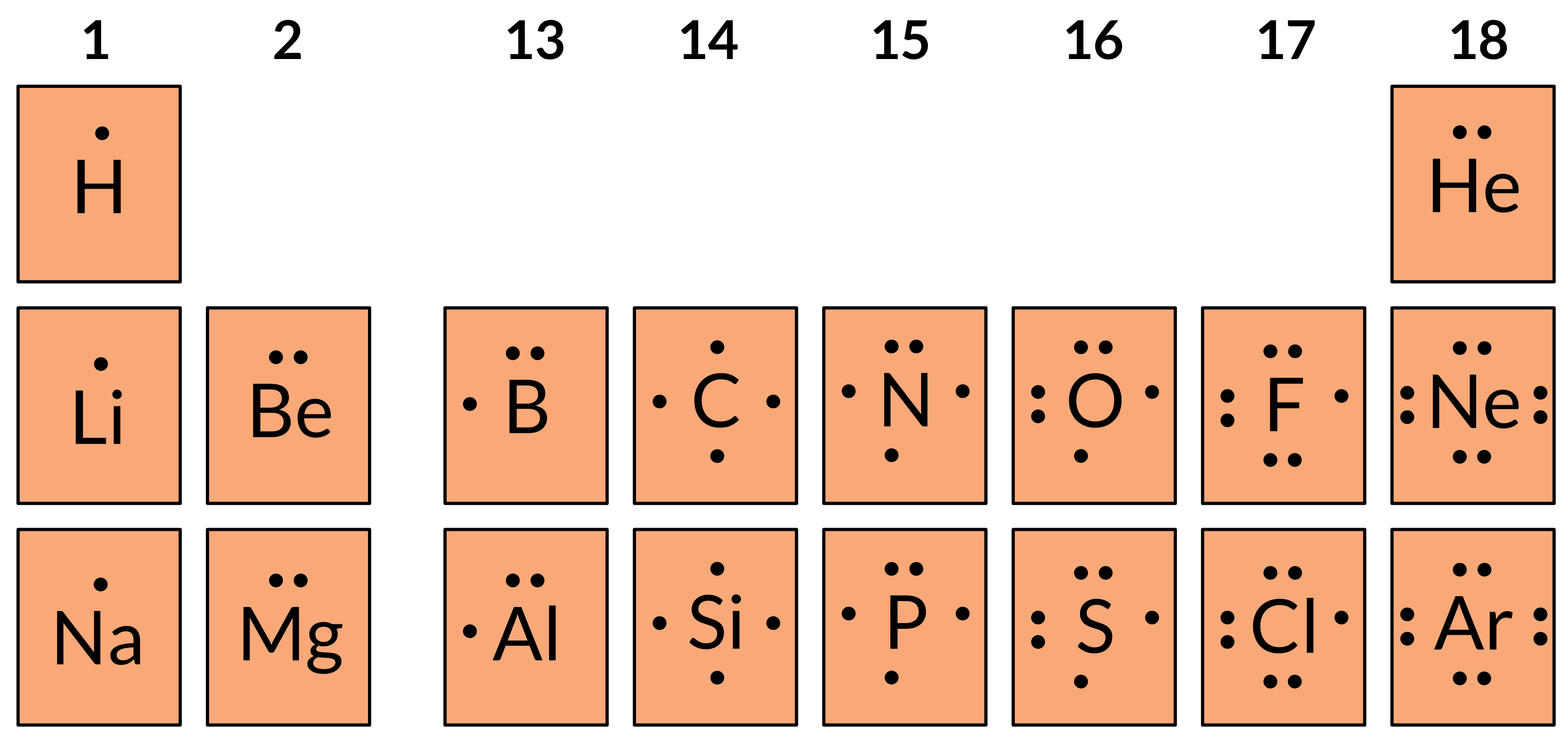
- the number of dots in a Lewis Diagram is equal to the number of valence electrons and the group number for main group elements
- some rules for drawing a Lewis diagram:
- the first 2 electrons in a shell pair up
- if there are exactly 4 electrons, draw 1 dot on each side
- for ions, the number of dots drawn is relative to the neutral atom’s number of valence electrons
- anions are drawn with extra dots because they gain electrons
- cations are drawn with fewer or no dots because they lose valence electrons
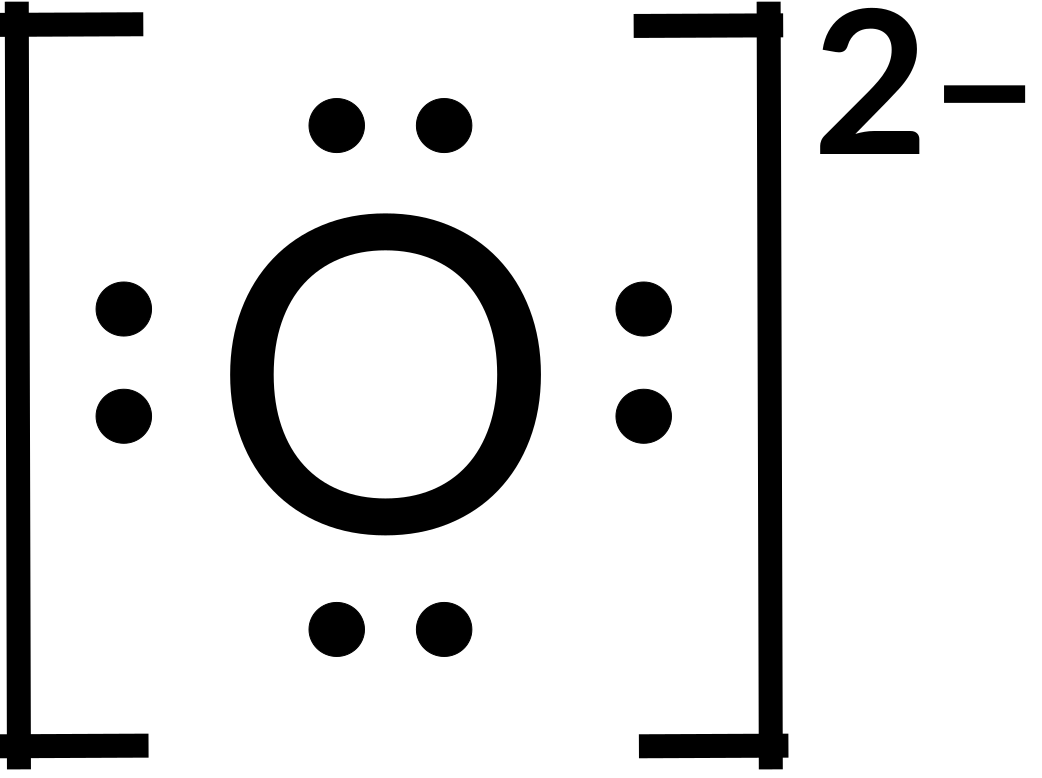 Lewis diagram for an oxide anion.
Khan Academy, CC BY-NC-SA 3.0
Lewis diagram for an oxide anion.
Khan Academy, CC BY-NC-SA 3.0
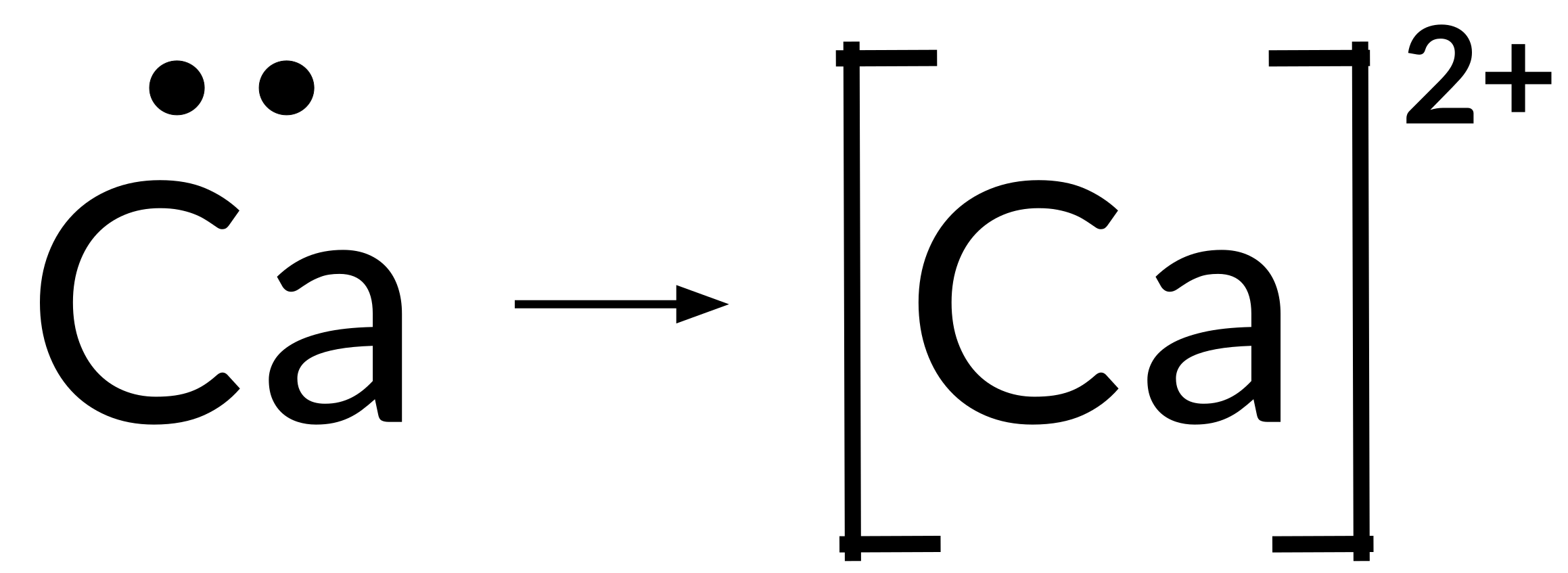 Lewis diagram for a calcium cation.
Khan Academy, CC BY-NC-SA 3.0
Lewis diagram for a calcium cation.
Khan Academy, CC BY-NC-SA 3.0
The octet rule
- atoms tend to gain, lose, or share electrons until their outer most shell has 8 electrons
- helium (\ceHe) is an exception as its outermost shell is full/stable with 2 electrons
Periodic table patterns
 Khan Academy, CC BY-NC-SA 3.0
- for the main element groups, you can quickly determine the number of valence electrons based on their group numbers
- group 1 = 1 valence electron
- group 2 = 2
- group 3-8 = atomic number - 10