- radiation is energy travelling through space
- it interacts with matter, how it interacts depends on the type of radiation and the type of matter
Electromagnetic radiation
- electromagnetic (EM) radiation is energy transferred by oscillations in the electromagnetic field
- it has both wave and particle properties
Electromagnetic waves
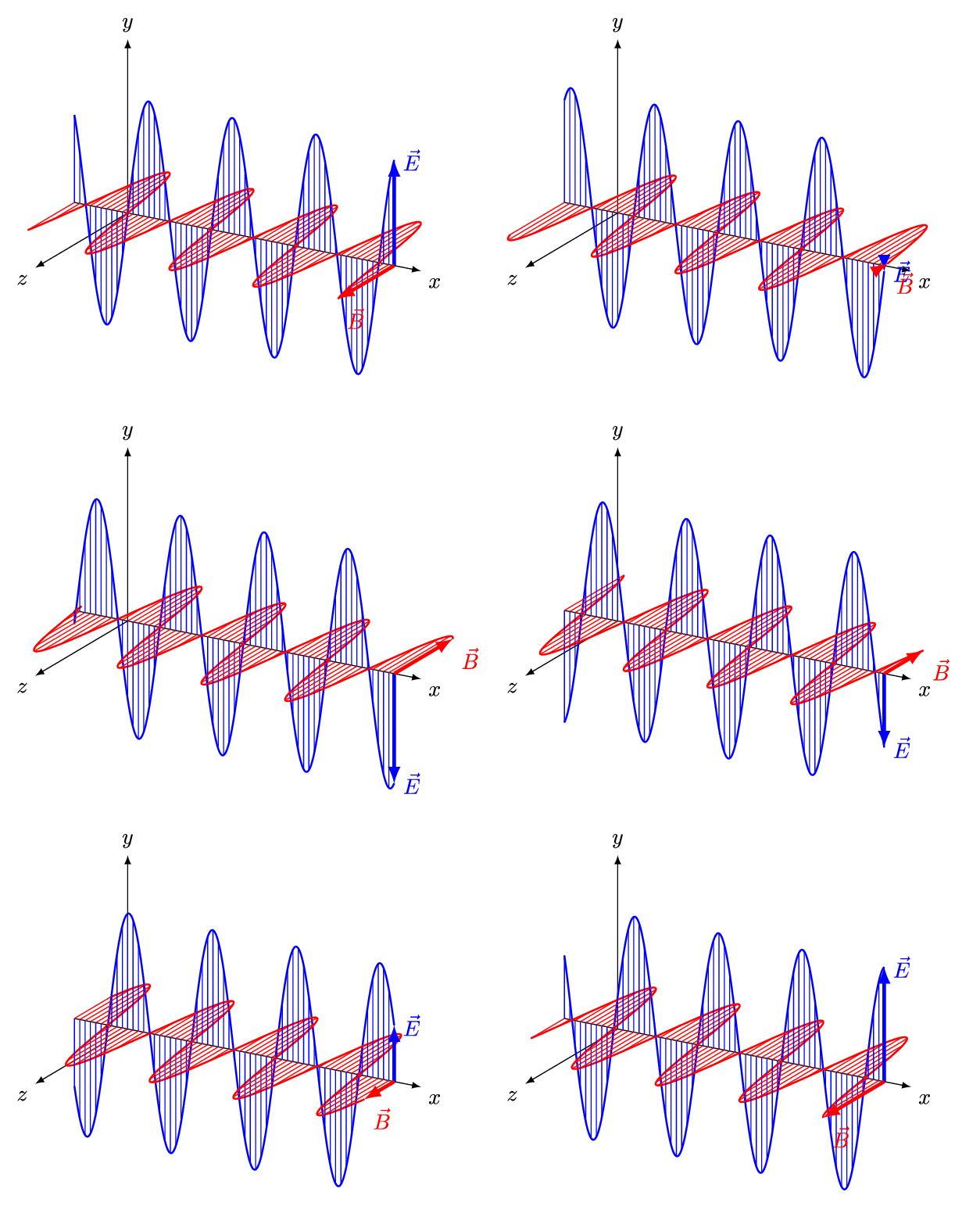
- the electric field () and magnetic field () are perpendicular to each other
- a changing electric field creates a magnetic field, and a changing magnetic field creates an electric field
- like any way, EM waves have wavelength, frequency, speed
Photons
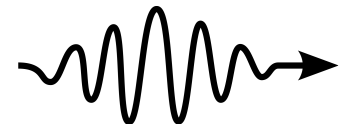
- a particle of EM radiation is called a photon
- all EM radiation travels at the speed of light in a vacuum:
- EM radiation travels slower through matter, like water or glass
The electromagnetic spectrum
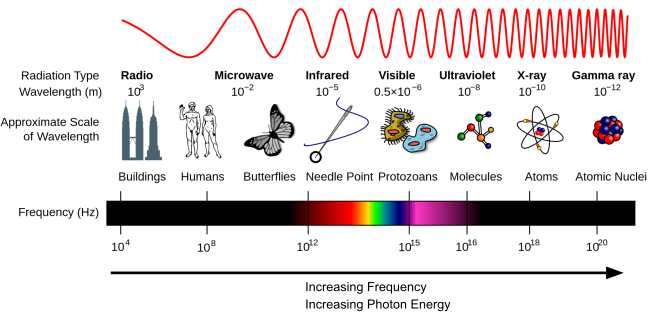
- there is a wide range for wavelength, frequency, and energy of EM radiation
- this range is called the electromagnetic spectrum
- shorter wavelength → higher frequency → higher energy photons
Wavelength
- the distance from one peak of a wave to the next peak
- EM wavelengths range from 10^3# meters to 10^{-12}$ meters
Frequency
- the amount of waves over a period of time
- = 1 cycle/second
- EM frequencies range from to
Energy
- photon energy increases as frequency increases
- one unit used to measure the energy of an individual photon is the electronvolt
Regions of the EM spectrum
- each region/range of the EM spectrum has a name
Radio waves
- longest wavelength and lowest frequency
- AM and FM radio
Microwaves
- higher frequency than radio waves
- WiFi is also in the microwave range
Infrared
- higher frequency than microwaves
- our bodies, and things at “normal” temperatures that we interact with, emit infrared radiation, so we usually associate infrared radiation with warmth
Visible light
- higher frequency than infrared
- the frequencies of the EM spectrum that human eyes can see
- red — the longest wavelength and shortest frequency
- violet — the shortest wavelength and highest frequency
- other colours of the rainbow (ROYGBIV) are in the frequencies in between
- some colours like white are a mixture of frequencies perceived at the same time
Ultraviolet (UV)
- higher frequency than visible light
- UV light has enough energy to damage living tissue, causing things like sunburns and eye damage
- the sun emits UV radiation and visible light
- most UV radiation is blocked by the Earth’s ozone, but some still gets through
X-rays
- higher frequency than UV light
- x-ray radiation has enough energy to ionize
- when an x-ray photon hits an atom, it can lose an electron, causing the atom to become an ion
- too much ionization from x-rays can cause cell damage and mutations
- normal medical x-rays are safe
- x-ray photons enter tissue, denser tissue (bones) block enough photons to cause a shadow image in sensors
- normal medical x-rays are safe
Gamma rays
- the highest frequency/energy radiation in the EM spectrum
- Gamma photons have enough energy to ionize atoms
- the most dangerous radiation to living tissue
- produced by high energy interactions in space, and radioactive decay (gamma decay) 1
Footnotes
-
TODO — what interactions in space? what is gamma decay? ↩